 The Maid on the Shore
The Maid on the Shore
The Maid on the Shore
Castlebay - 1988 The Long Isle - 1989 The Peat Fire Flame - 1990 Down To he Shore - 1991 Harvest - 1992 Angels We Have Heard (1)- 1994 Faeries Hornpipe - 1994 Looking Home - 1995 The Skye Suite - 1996 Angels We Have Heard (2) 1997 Song of the Sea - 1998 The Ballad of Cappy John - 1999 Ladies - 1999 In a Garden Green - 2000 Sea & Skye - 2001 Gentlemen - 2002 Yuletide Treasure - 2002 Cottage & Castle - 2003 Ae Fond Kiss - 2003 Imram - 2004 The Night the Whiskey Froze - 2004 Islands In Time - 2006 Banks & Braes - 2007 The Grand Design* - 2007 Harvest Home - 2007 Going Home - 2008 Rantin', Rovin' Robin - 2009 Bards & Blarney - 2009 2010 Yuletide Revelry - 2010 Imbolc - Rekindling the Flame* - 2010 Festival of Faeries - 2011 John Earthy's Tavern* - 2012 Bound Away - 2015 Samhain - Banking the Fire - 2017 Winter Moon - 2019 Bygone Ballads of Maine, Vol I (book) 2021 Sundrie Aires - 2023 The Maid on the Shore - 2024
* These recordings have extensive notes.
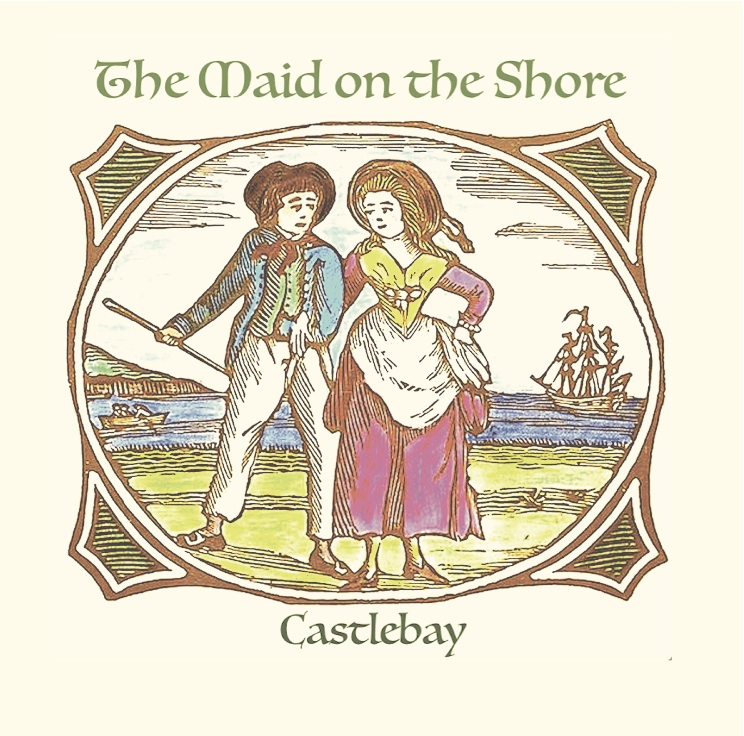


This is our second album of songs from our Songs of Ships & Sailors.
The Sailor's Come-All-Ye 3:29
Traditional, collected from Susie Carr Young, c. 1925
Julia Lane - Vocal and harp
Fred Gosbee - 14-string guitar, vocal
Oh, come all ye pretty fair maids. If you did but know All the dangers and the hardships that sailors undergo You would have better regard for them than e'er you had before And hate the lazy landsman that's always on the shore!
They are always with the pretty girls and telling them fine tales about the hardships they endure while plowing their corn fields. It's pulling of the weeds and grass: it's all that they do know. While we, like jovial seamen boys, go plow the oceans through.
And when the sun, it does go down, aside they'ss throw their plow. Saying, "Our day's work has ended, boys. It's homeward we'll go now." And when the night gets dark as pitch into their bed they'll crawl While we, like jovial seamen boys, stand many a bitter squall.
When eight o'clock, it does come 'round, the wing begins to blow. Our captain, he commands us all, "All there from down below! All there from down below, me boys! Prepare our ship to guard. Aloft! Aloft, ye lively lads. Send down the t'gansel yard!"
Oh, the seas, they run mountains high and toss us up and down. In the midst of all these dangers, boys, we fear our ship will drown. But don't let that discourage us boys. We'll see the girls again. For the might of all America we'll cross the raging main.
Oh, we'll sail to all parts of the world that's never seen before And we'll bring back gold and silver, boys. That's when we do return. We'll make this country flourish, boys, like it never did before And when our money is all gone we'll plow the seas for more.
The Tarry Sailor 3:35
Traditional
Fred Gosbee - vocals, 12-string guitar
Julia Lane, Celtic harp, vocals
I came on shore in the month of May and carelessly I went walking When I overheard my own true love and her old father talking, Saying, "Jack, your true love, has come ashore. He is the one that you adore But silly Nancy your tricks are o'er, You'll not wed with a tarry sailor!
But Jack stepped up just as nimble as a bee and he says, "My lov-er-lie Nancy I have just come home from sea to my heart's delight and fancy. I have been where the raging billows roar And ofttimes faced a daring foe So answer me quick-er-ly - yes or no Will you wed with a tarry sailor?"
But her old father was standing by and at Jack was a-gawking. He says, "Young man you might as well be gone as to stand here and be talking. For my daughter, she is far too young, And a sailor has a flattering tongue So quit my presence and be gone! She'll not wed with a tarry sailor
But Jack spoke up as bold as can be and he says, "My lov-er-lie Nancy Do ya' think I would come home from sea with both my pockets empty?" Then on the table, so I've been told He placed five thousand in sparkling gold. He dropped right into her apron fold: "Take this from a tarry sailor!"
Now her old father was standing there when he saw Jack act so clever. "Since you have given her all your store, now Jack, you may have her. And since you've given her all your store I'll double that and ten times more I'll double that and ten times more Although you're a tarry sailor."
The Lowlands of Holland 4:19 Traditional, this version from Carrie Grover, c. 1925
Julia Lane - vocal and harp
Last Easter I was married, that night I went to bed There came a bold sea captain and stood at my bedhead Saying "Rise, arise you married man and come along with me To the low, lowlands of Holland to face your enemy."
I clasped my arms about my love imploring him to stay But still that bold sea captain said "Arise and come away! Arise, arise you married man and come along with me To the low, lowlands of Holland to face your enemy."
For Holland is a cold place, a place that grows no green, Neither flowers nor habitations for stranger's to dwell in. But they say that money is plenty as the leaves upon the trees. A curse rest on that captain that parted my love and me.
Said the mother to the daughter dear, "Why do you thus lament? There are men enough in our town to make your heart content." "There are men enough in our town , but ,alas, there's none for me I never had but one true love and now he has gone from me.
"I'll wear no sash around my waist, no comb come in my hair No fire, nor coal, nor candlelight shine in my chamber more And never will I married be until the day I die. A curse rest on that captain that parted my love and I."
Black-Eyed Susan 3:20
John Gay (1685-1732)
This lyric by John Gay was published in 1720 and set to the tune by Richard Leveridge around 1730. This version was collected from Charles Finnemore in Staceyville, Maine, in 1943.
Fred Gosbee - vocal, baritone 12-string guitar
All on the Downs the fleet lay moored, Their banners waving in the wind, When Black-eyed Susan came on board, Saying where shall I my true love find? Tell me, ye jovial sailors, tell me true, Does my dear Willie, does my dear Willie Sail among your crew?
Willie, who high upon the yard, Rocked with the billows to and fro, Soon as that well-known voice he heard, He sighed and cast his eye below. The cords glide swiftly through his glowing hands And quick as lightning, quick as lightning On the deck he stands.
"Oh Susan, Susan, dearest dear! My vows will ever true remain, Let me kiss off those falling tears, We only part to meet again. The noblest captain in all the British fleet Might envy Willie, might envy Willie's lips Those kisses sweet.
"Oh, heed not what those landsmen say They'll tempt with doubts thy constant mind, They'll tell thee sailors when away, In every port a mistress find: Yes, yes, believe them when they tell thee so, For thou art present, thou art present Wheresoe'er I go.
If to fair India's coast we sail, Thine eyes are seen in diamonds bright. Thy breath is Africa's spicy gale, Thy skin is ivory so white. The pleasant breezes, wherever they blow They bring me memories, They bring me memories Of my lovely Sue."
The bo's'n gave the dreadful word, The sails their swelling bosom spread: She could no longer stay on board - He turned, she sighed, and hung her head. Her little boat unwilling rowed to land, "Adieu," she criéd, "Adieu," she cried And waved her lily hand.
The Sailor and the Sea Captain 5:37
Traditional from Charles Finnemore, Bridgewater, ME,1942
Transcribed by Julia Lane.
Fred Gosbee - vocal, concertins, tin whistle, mmandolin
Come all jolly sailors wherever you be I pray give attention and listen to me It's of a sea captain, a frolicsome sport, Who courted a sailor's fair wife in the dark
Chorus: Derry a-ye O-day Fol the dol laddie, sing whack fol the day.
It's of a young sailor, Jack Hansen by name. He had a brisk and frolicsome dame. She went onboard for her husband to see. "Oh, good!" said the Captain, "A partner for me!"
Their supper being finished, their pleasures was o'er And all of the ladies returned to the shore While all the poor sailors onboard they must stay As the captain went off this fair charmer to see.
Now Jack apprehending that something was wrong He got on shore and he quickly went home And under the bed himself did convey To hear what the captain to his wife might say
"Here's fifty bright guineas my joy and delight If you will consent to lie with me tonight. Your husband shall have a promotion at sea. Sure, I'll treat him more kindly than I did agree!"
The sight of the gold so delighted this dame She quickly consented to play at the game And off to bed this gay couple did go And the game that they played was the Up and Ti-yo
This tiresome game it soon put them to sleep From under the bed, then, Jack he did creep He put on the captains own britches and coat His wig and his waistcoat to make up the joke
Now Jack was arrayed from this top to his toe And off to the captain's own house he did go And when he got there he knocked loud and bold In the captain's own coat of the scarlet and gold
The chambermaid came and she brought him a light But Jack didn't seem for to get in a fright "Oh, where is your mistress?" She answered. "In bed." "Oh, open the chamber door quickly!" Jack said
Pretended to be drunk, then Jack staggered in The captain's wife scolded him, "Where have you been? All day long with the girls you will stroll At night you come rolling home drunk as a fool!"
Jack turned around, give the candle a puff. And she rolled herself over all in a great huff. He jumped into bed as a sailor would do. He reefed 'er, he hauled 'er till he brought her to!
He reefed 'er, he hauled 'er, he tickled her knee. At length this fair damsel began to grow pleased. With captain's wife all night Jack did lay Sure, he laid in her arms till broad break of day
When she awoke and saw his strange face She drew in her breath, made a pitiful case. "Oh, lady," said Jack," don't you be in a fright- Your husband was kissing my wife all last night!"
She listened while Jack then his story he told. She laughed at it all that her two side could hold. "Go hitch up my carriage, we'll make up the jest, And we'll go see that rogue in his tarpaulin vest"
Then Jack and his lady they cut a fine show As off through the town to Jack's house they did go And when they got there the first words was spoke "Oh God!" said the captain, "Jack take off my coat!"
"Here's fifty bright guineas, Jack, take off my coat! And don't to the rest of the sailors report For many a sailor's been cuckold you know. Here's four jolly cuckolds all stand in a row
Jacket So Blue 3:47
Traditional, collected from Hanford Hayes, Staceyville, ME, in 1947.
Julia Lane - vocal
Of a ship's crew of sailors a story you shall hear. From Greenland to Liverpool their passage did steer. There was one amongst them I wish I never knew. He was a jolly, jolly sailor in his jacket of blue.
Oh, the first time I saw him he'd a spyglass in hand. I tried to talk to him but with me he wouldn't stand. I tried to talk to him but away from me he flew. Oh, my heart it went with him in his jacket of blue.
I said, "Noble sailor, I will buy your discharge! I will free you from a sailor boy. I will set you at large. I will free you from a man-o'-war if your heart will prove true And I will never put a stain on your jacket of blue."
He said, "Noble lady, you'll buy my discharge. You will free me from a sailor boy- you will set me at large. You will free me from a man-o'-war if my heart will prove true But what would my faithful wee Scotch lassie do?"
I will send for an artist from London to Wales To take my love's portrait, to take it with skill. I will hang it in my parlor right close to my view And say I once knew a sailor whose heart was so true.
The Lass of Mohea 5:27
Traditional
This song was very popular with at least 13 versions collected in Maine.
J Fred Gosbee - vocal, 14-string guitar
Oh, as I went out a-walking one morning in May In sweet recreation to while time away And as I sat musing by myself on the grass Then who should I spy but a fair Indian lass?
She came along beside me and taking my hand Saying, "You are a stranger and in a strange land. But if you will follow you're welcome to come and dwell in the cottage that I call my home."
Oh, the sun was fast sinking far o'er the blue sea As I wandered alone with my charming Mohea. Together we wandered, together we roved 'Till we came to her cottage in the coconut grove.
Then this kind expression she made unto me, "If you will consent, sir, and stay here with me And go no more roaming across the salt sea Then I'll teach you the language of the Isle of Mohea."
I said, "My pretty fair one, that never can be For I have a sweetheart in my own country And I will be faithful for I know she loves me And I will not forsake her for my charming Mohea.
It was early in the morning, one morning in May When unto my fair one these words I did say, "I am bound now to leave you, so farewell, my dear. My ship's sails are spreading and it's home I will steer."
Oh, the last time that I saw her, she stood on the strand And as my boat passed her she waved me her hand Saying,"When you have landed to the one that you love Think of your charming Mohea and the coconut grove."
Well, after I had landed on my own native shore With my friends and relations gathered 'round me once more I gazed all about me but none could I see Was fit to compare to my charming Mohea.
And the girl I had trusted: she proved false to me So I'll turn my course backwards across the blue sea. I'll turn my course backwards and this land I'll flee Spend the rest of my days with my charming Mohea.
The Maid on the Shore 3:50
Traditional, lyrics adapted by Julia Lane from the singing of Mr. Horace Priest, Sangerville Maine, as learned circa 1860 from Charles Porter in a lumber camp, with additions from other versions.
Julia Lane, vocals Fred Gosbee - baritone 12-string guitar, fretless bass guitar, bowed psaltry, viola
There was a fair maiden lived by the sea shore And she had been crossed in love-o To ease all her woe she used for to go Walking down along by the sea shore, shore Down along by the sea shore
There was a bold captain, he plowed the rough sea Let the winds blow high, blow low-o "I will die, I will die," the sea captain did cry, "If don't have that maid from the shore, shore If don't have that maid from the shore!"
"Oh, I have got jewels and I have got gold And I have got costly ware-o All these I will give to my noble ship's crew If they'll bring me that maid from the shore, oh, shore, Bring me that maid from the shore."
With many persuasions the maid came on board, The captain he welcomed her there-o. He carried her down to his cabin below Saying "Fair you well sorrow and care, oh, care, Fair you well sorrow and care."
She said "You must listen while I sing a song It will drive away sorrow and care-o" The song was so neat, so mild and complete She sang captain and sailors to sleep, sleep Captain and sailors to sleep.
She robbed them their jewels, she robbed them their gold, She robbed them their costly ware-o. Of the captain's broadsword she made her an oar And rowed herself back to the shore, oh, shore Rowed herself back to the shore
Oh were my men sleeping or were my men mad, Or were my men sunk in despair-o To let this fair maid so loving and gay Rob them of their jewels and gold, gold. Rob them of jewels and gold.
Your men were not sleeping, your men were not mad, Your men were not sunk in despair-o. I have deceived you and all your ship's crew And again I'm a maid on the shore, oh shore Again I'm a maid on the shore. Yes I'm still the maid on the shore, oh, shore. I'm still the maid on the shore.
Our Gallant Ship 4:25
Traditional
This unusual version of :The Mermaid: was collected in Chamcook, NB, from Margaret McGill c. 1925. This song originally came from Galloway and Dumfries, in Scotland, where all that remained was a children's playground rhyme. In 1999 we were able to take the song home and teach it to school children there.
Fred Gosbee - vocal, 14-string guitar, harmonica Julia Lane - vocal
On a stormy sea as we set sail, Not far, not far from the land Our lookout he spied a bonnie mermaid With a comb and a glass in her hand, her hand, her hand A comb and a glass in her hand
Chorus: She may look she may sigh wi' a watery eye She may look tae the bottom o' the sea, the sea, the sea She may look tae the bottom o' the sea.
Then up spoke the Captain o' our gallant ship And a fine old man was he. "Oh, I hae a wife in Edinburgh toon An' this nicht she'll be lookin' out for me, for me, for me, Aye, this nicht she'll be lookin' out for me"
Then up spoke the mate o' our gallant little ship An' a brave young man was he. "Oh, I hae a wife in fair Edinburgh toon An this nicht she'll be lookin' out for me, for me, for me, Aye, this nicht she'll be lookin' out for me."
Then up spoke the cabin boy o' our gallant ship An' a fine wee laddie was he. "Oh, I hae a sweetheart in Edinburgh toon An this nicht she'll be lookin' for me, for me, for me, Aye, this nicht she'll be lookin' for me."
Then up spoke the cook o' our gallant little ship, An' a cross old cook was he. "Oh, I hae mair bother wi' me kettles pots an' pans Than ye wi' your wives all three, all three, all three, Than ye wi' your wives all three."
Then three times 'round went our gallant little ship Three times 'round went she. Three times 'round went our gallant little ship An' she sank tae the bottom o' the sea, the sea, the sea, She sank tae the bottom o' the sea.
The Fate of Franklin 4:49
Traditional, collected from Will Merritt, Ludlow, Maine, in 1941.
Learned from his mother who was born in Scotland
Julia Lane - vocal, harp
Fred Gosbee - viola
A sailor bold and undaunted stood As the waves rolled over the briny flood Come pay attention to what I say 'T will put you in mind of a sailor's dream.
When homeward bound one night on the deep While in my hammock I fell asleep. I dreamt a dream that I thought was true Concerning Franklin and his bold crew.
As we were nearing old England's shore I heard a lady so sad implore. She wept aloud and she seemed to say, "Alas, my Franklin is far away"
It's been seven years since that ship of fame It bore my Franklin across the main With a hundred sailors of courage true To find a northwestern passage through
To seek a passage around the Pole Where lightning flashes and loud thunder rolls It's so much more than a man can do Though heart undaunted and courage true.
There was Captain Kelly of Sedgewick town And Captain Osburn of high renown And Doctor Tate like so many more That's long been cruising the Arctic shore
Oh they sailed east and they sailed west From Greenland's Island where they thought best They met with hardships and vainly strove Through mountains of ice where their ship was stove
In Baffin Bay where the cold wind blows The fate of Franklin nobody knows. Five hundred pounds would I freely give To know on earth that my Franklin lives.
But, alas, he's gone like so many more That left their home to return no more. God help the widows who sorely weep For loss of husbands across the deep.
The Oak and the Ash
Traditional
Traditional
Fred Gosbee - vocal, 14-string guitar, tin whistle
Chorus: Home, dearie, home to your own count-er-ie, Home, dearie, home to your own count-er-ie, Where the oak and the ash and the bonnie birch tree Are all growing green in North Ameriky.
A sailor, being drowsy, he hung down his head. He called for a candle to light him to bed. She lit him to bed - as a maiden ought to do And he vowed and declared she must come with him, too.
She, being young, well, she thought it no harm. She jumped right in beside him to keep herself warm. He hugged her. He kissed her. He called her his dear. She wished that short night, it had been a long year.
Early next morning, the sailor he arose And into her lap he poured handsful of gold Saying, "Take this, my dear, 'twill buy you milk and bread For that is what you get for lighting sailor lads to bed.
"If it is a girl she shall wear a gold ring. If is a boy he shall fight for his king. With his low quarter shoes and his jacket so blue He'll walk the quarter deck like his daddy used to do."
Peter Street 4:44
Traditional, collected from Charles Finnemore, Bridgewater, ME, in 1943.
Variants of this song are well known and widespread. It would seem that even if sailors weren't always in danger of losing all their clothes on shore they still enjoyed singing about it. Given the Irish penchant for self-deprecating stories that make fun of adversity, the place of action might be Peter Street in Dublin, which saw a great deal of activity involving sailors in the 19th century. The location of Weakinstown may be Walkinston, a suburb of Dublin.
Fred Gosbee - vocal, 14-string guitar Julia Lane - vocal, Celtic harp
Come seamen bold, both young and old, a story you should know About a trick was played on me not very long ago. The other day I came from sea, a fair one I did meet And she kindly asked me to a dance, 'twas up on Peter Street. She kindly asked me to a dance, 'twas up on Peter Street.
I said "My handsome fair one, I can't dance very well. I'm on my way to Weakinstown where all my friends do dwell. The other day I came from sea; I've saved up fifty pounds. My friends will be expecting me tonight in Weakinstown, My friends will be expecting me tonight in Weakinstown."
"Well, if you can't dance very well, sure you can have a treat. You can have a glass of brandy and something nice to eat. This very night at ten o'clock I'll meet you at the train If you'll consent to call on me when you come to town again, If you'll consent to call on me when you come to town again."
Well, finding her so friendly-like, I called upon a car To take us to the bar room; the distance was not far. The girls all on the other side to me these words did say, "Oh poor ol' chap, you'll lose your cap if you go down that way, Oh poor ol' chap, you'll lose your cap if you go down that way!"
Well, we had not been there very long 'til the liquor did come in, And when every man had stood a round the dancing did begin. Me and my true love dancéd all to a pretty tune. She says, "My dear, let us repair to a chamber all alone!" She says, "My dear, we will repair to a chamber all alone!"
So when the dancing was all done we straight to bed do go But it's little did I realize she'd prove my overthrow. My watch and chain, my fifty pounds, my cltheing all had fled And theere was I left all alone, stark-naked on the bed, Yes, there was I left all alone, stark-naked on the bed.
When I come into my senses, there was nothing could I spy But a woman's shirt and apron that upon the bed did lie. I cursed, I swore, my hair I tore, alas, what could I do? I said, "Farewell fair Weakinstown, I'll nevermore see you." I said, "Farewell fair Weakinstown, I'll nevermore see you."
Now fair you well sweet Weakinstown, I never shall see you.
When everything was quiet, 'bout the hour of twelve o'clock, I put on the shirt and apron and headed for the dock. The sailors when they saw me, to me these words to me did say: "Oh poor ol' chap, you've lost your cap since you've gone down that way, "Oh poor ol' chap, you've lost your cap since you've been gone that way."
"Is that the new spring fashion, Jack, that's come upon the shore shore? Oh, where's the shop you buy them at? Have they got any more?" The captain says, "Now Jack, me boy, I thought in Weakinstown You might have found a better suit than that for fifty pounds! You might have found a better suit than that for fifty pounds!"
Well, I might have found a better suit if I had had the chance. I was walking down by Peter Street and askéd for to dance. I danced my own destruction! I'm skinned from head to feet And I'll take my oath no more I'll go to dance on Peter Street! I'll take my oath no more I'll go to dance on Peter Street!
So come seamen bold, both young and old, a warning take by me: Be careful of bad company when you go on a spree. Be careful bad company or you'll end up like me With a woman's dress and apron for to fit you out for sea, With a woman's dress and apron for to fit you out for sea.
2006-08-07 © Castlebay, Inc.
email us