 Castlebay 1988
Castlebay 1988
Castlebay 1988
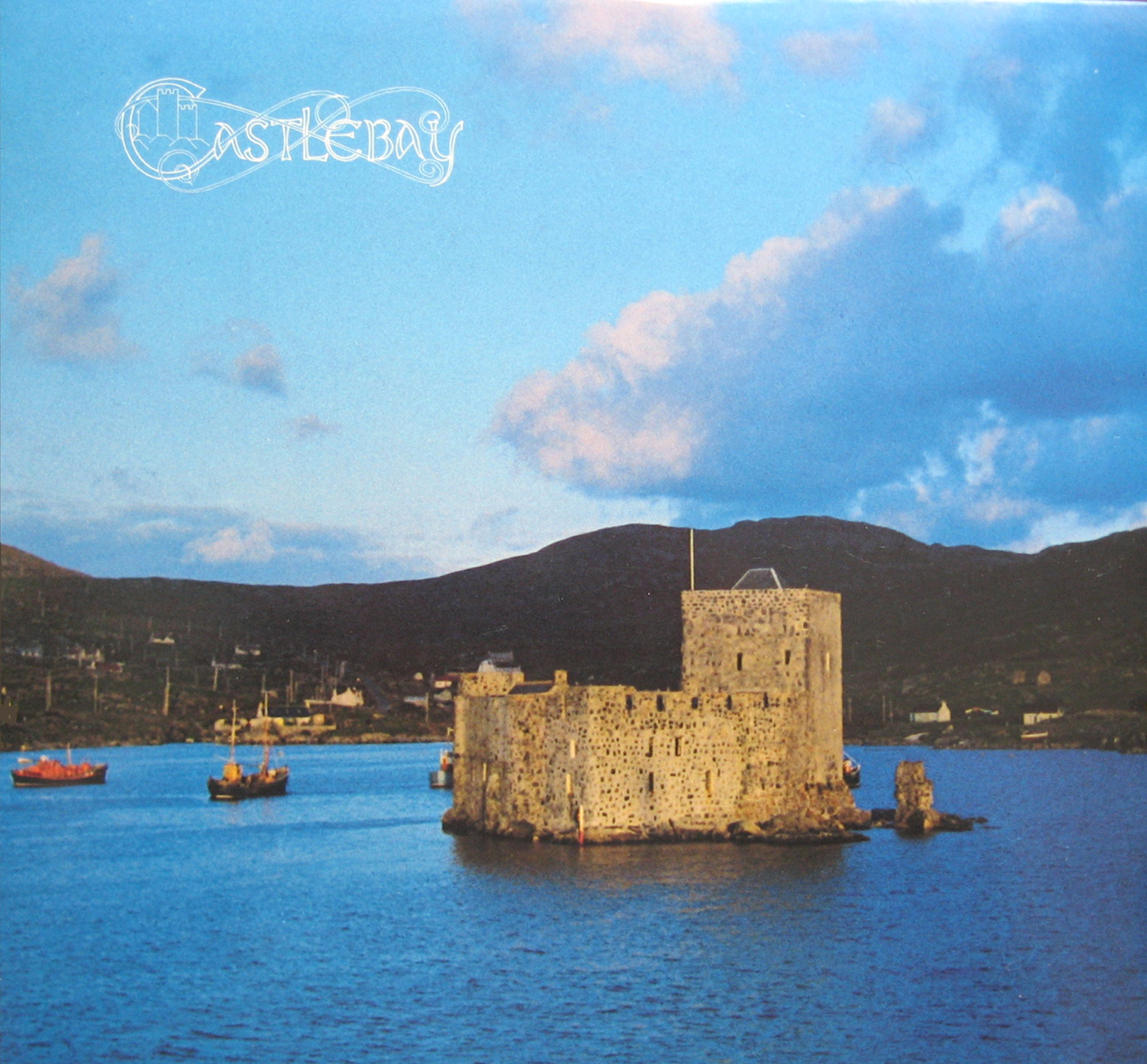


"Castlebay has a unique approach to traditional music of the British Isles. Contemporary arrangements, incorporate strong four-part acapella vocal pieces and ballads enriched with varied instrumental textures to enhance the lyric content of the song. Their intent is to make traditional music more accessible to a contemporary audience, to rekindle the connection with basic human experience as originally expressed in the songs."
We still have a few LPs in the warehouse. Want one?
credits: Originally released October 15, 1988, on LP and cassette tape. Now available on CD or digitally from Bandcamp
Brian Chadbourne - lead vocals, autoharp
Fred Gosbee - lead vocals, harmony vocals, 12-string and classical guitars, pennywhistle, harp (!)
Julia Lane - lead vocals, harmony vocals, classical guitar, piano
Marl McNeil - lead vocals, harmony vocals, 6-string guitar, classical guitar, cello, piano
Engineers: Tim McLaughlin & Sean Carton
Mixed and mastered at Treefrog Productions by Tim McLaughlin, Mark McNeil & Fred Gosbee
Remastered at Frankford/Wayne Mastering Labs, NY, by Tom Coyne
Cover photo: John Dunning
John Barleycorn [3:39]
Traditional
Traditional
John Barleycorn is a personification of barley and the alcoholic beverages made from it: beer and whisky. In the song, he suffers indignities, attacks, and death that correspond to the various stages of barley cultivation, such as reaping and threshing.
There is written evidence of the song dating at least as far back as the Elizabethan era in Scotland. There is an English broadside dating from 1624.
The song survived into the twentieth century in the oral folk tradition. In most traditional versions the plant's ill-treatment by humans and its re-emergence as beer to take revenge are key themes.
lyrics
Oh, barleycorn is the very best seed that ever was sown on land
For it would do the heart most good in the turning of man's hand
In the turning of man's hand.
There were three men came down from Kent to plant for wheat and rye
And these three men made a solemn vow John Barleycorn must die,
John Barleycorn must die!
They laid him in three furrows deep, laid clods upon his head
And these three men made a solemn vow John Barleycorn was dead,
John Barleycorn was dead.
Fa la la la, it's a lovely day
Sing fa la la lay-o
Fa la la la, it's a lovely day
Sing fa la la lay-o
They let him lie 'till a midsummer day when the rain from heaven did fall
And little Sir John strand up his head; he did amaze them all,
He did amaze them all
They let him stand 'till a midsummers day when he looked both pale and wan
And little Sir John, he grew a long beard and he so became a man,
He so became a man
They've hired men with a scythe so sharp to cut him off at the knee.
They've rolled him and tied him around the waist: they've served him barbarously,
They've served him barbarously.
They've hired men with crab-tree sticks to cut him skin from bone
And the miller he has served him worse than that for he ground him between two stones,
He ground him between two stones.
They've wheeled him here, they've wheeled him there, they've wheeled him to a barn.
And they have served him worse than that, for thy bunged him in a vat,
They bunged him in a vat.
They've worked their will on John Barleycorn but he lived to tell the tale
For they pour him out of an old brown jug and they call him home-brewed ale,
They call him home-brewed ale.
I'll Lay Ye Doon [4:34]
Traditional
The voyeur device is found in many traditional songs, usually not as benign as it is in this case.
lyrics
As I walked out on a summer evenin'
Doon by the water and the pleasant strand
As I was walkin, I heard 'em talkin'
Sayin', "Surely he is an honest man"
I will lay ye doon, love, I'll treat ye decentI have traveled far, far from Inverney
I'll lay ye doon, love, I'll fill your can
I'll lay ye doon, love, I'll treat ye decent
For surely he is an honest man
So now I maun go far from you, my love,
But then I'll return and I'll tak' your hand,
No more to roam from you, my love
And no more to walk on a foreign strand.
The Sally Gardens [3:26]
Traditional
William Butler Yeats
Down by the Salley Gardens, one of W. B. Yeats's great early poems, was published in The Wanderings of Oisin and Other Poems in 1889, when Yeats was still in his mid-twenties.
Down by the salley gardens
My love and I did meet;
She passed the salley gardens
With little snow-white feet
She bid me take love easy
As the leaves grow on the tree;
Ah, but I was young and foolish
With her would not agree
In a field down by the river
My love and I did stand
And upon my leaning shoulder
She laid her snow-white hand
She bid me take life easy
As the grass grows on the weir;
But I was young and foolish
And now am full of tears
Sea Shanty Medley [3:28]
Traditional
This medley of three popular sea shantys is sung way too fast. We know that, but we like it! Shantys were a 19th-century phenomenon, there is scant evidence of their use before 1800.
Away Rio is a capstan shanty, used for hauling anchor.
Haul Away Joe is a drag shanty, used for strong, hard pulls
Cape Cod Girls is a halyard shanty, used for setting and trimming sails.
A ship went a-sailing out over the bar
Away Rio!
She pointed her bow to the southern star
We're bound for the Rio Grande!
Away Rio! Away Rio!
It's fare the well to the pretty young girls
We're bound for the Rio Grande
It's farewell to Sally and farewell to Sue
Away Rio!
And you on the pier head, it's farewell to you
We're bound for the Rio Grande!
The chain's up and down now the bosun did say
Away Rio!
And up to the hawsepipe the anchor's aweigh
We're bound for the Rio Grande!
When I was a little lad and so me mother told me
Way, haul away, we'll haul away Joe
If I didn't kiss the girls my lips would get all moldy
Way, haul away, we'll haul away Joe
Way haul away, we'll hall away togetherKing Louie was the king of France before the revolution
Way, haul away, we'll haul away Joe
Way haul away, we're bound for better weather
Way, haul away, we'll haul away Joe
Cape Cod girls ain't got no combs
Heave away haul away
They comb their hair with codfish bones
We're bound for South Australia
Heave away me bully boysCape Cod boys ain't got no sleds
Heave away, haul away
Heave away, don't make no noise
We're bound for South Australia
Cape Cod cats ain't got no tails
Heave away haul away
They got blown off in the northeast gales
We're bound for South Australia
Cape Cod girls ain't got no combs
Heave away haul away
They comb their hair with codfish bones
We're bound for South Australia
Broom of the Cowdenknowes [3:34]
Traditional
Broom O' the Cowdenknowes (Child #217) is a traditional Scottish love song which has been traced to the 17th century. Throughout the several versions of the popular folksong, there are many lyrical variations, but the plot remains consistent. This version is a bit ambiguous, which adds an air of mystery.
Oh the broom, the bonnie, bonnie broom
Broom or the Cowdenknowes
Fain would I be in the my ain country
Herding me father's yowes
How Blithe ilk morn was I to see
My lad come over the hill
He leaped the burn and ran to me
I met him with good will
He tuned his pipe and played so sweet,
The birds sat list'ning by;
E'en the dull cattle stood and gazed,
Charmed with his melody.
Hard fate that I should banished be
From all that I hold dear
Because I loved the finest lad
That ever yet was near
Bonnie Ship, the Diamond [2:37] Traditional
The song tells of an anticipated voyage from Peterhead, in Scotland, to the Davis Straight, between Greenland and Baffin Island. The Diamond and the other ships mentioned in the song were part of a fleet which sailed from Scotland around 1804 and were trapped in the ice and lost in 1805.
Oh, the Diamond is a ship, me boys, for the Davis Strait we're bound
And the quay it is all garnishéd with bonnie lasses 'round;
Captain Thompson gives the orders to sail the ocean wide
Where the sun it never sets, me boys, nor darkness dims the tide
So it's cheer up me lads, let your hearts never fail
When the bonny ship, the Diamond, goes a-fishing for the whale
At the quay of Peterhead, the lasses stand around
With shawls all pulled about them and the salt tears runnin' down;
Well don't you cry, my bonny lass, though you be left behind
The rose will bloom on Greenland's ice before we change our mind
So it's cheer up me lads, let your hearts never fail
When the bonny ship, the Diamond, goes a-fishing for the whale
Here's a health to the Resolution, likewise the Eliza Swan
Here's a health to the Battler of Montrose and the Diamond, ship of fame;
We wear the trousers of the white and jackets of the blue
When we return to Peterhead, we'll have sweethearts enough
So it's cheer up me lads, let your hearts never fail
When the bonny ship, the Diamond, goes a-fishing for the whale
It will be bright both day and night when Greenland lads come home
With a ship that's full of oil, me boys, and money to our name;
We'll make the cradles for to rock and the blankets for to tear
And every lass in Peterhead sing: "Hushabye, my dear"
So it's cheer up me lads, let your hearts never fail
When the bonny ship, the Diamond, goes a-fishing for the whale
Babylon [2:03]
Caleb Weeks
These are the three most popular verses of a much longer hymn written in 1877.
Hail the day so long expected,
Hail the year of full release.
Zion's walls are now erected,
And her watchmen publish peace.
Through our Zion's wide dominion,
Hear the trumpet loudly roar,
Babylon is fallen, is fallen, is fallen,
Babylon is fallen to rise no more.
Babylon is fallen, is fallen, is fallen,
Babylon is fallen to rise no more.
All her merchants stand in wonder,
What is this that comes to pass:
Murm'ring like the distant thunder,
Crying out, "Alas, alas."
Swell the sound, kings and nobles,
Priests and people, rich and poor;
Babylon is fallen, is fallen, is fallen,
Babylon is fallen to rise no more.
Babylon is fallen, is fallen, is fallen,
Babylon is fallen to rise no more.
Blow the trumpet in Mount Zion,
Christ shall rise a second time;
Ruling with a rod of iron
All who now as foes combine.
Cast ye off your faithless garments,
And your fellowship is o'er,
Babylon is fallen, is fallen, is fallen,
Babylon is fallen to rise no more.
Babylon is fallen, is fallen, is fallen,
Babylon is fallen to rise no more.
The Waters of Tyne [3:59]
The Water of Tyne is a folk song (Roud number 1364) from the northeast of England. The song is sung by a girl or woman lamenting the fact that her lover is on the opposite bank of the River Tyne.
Traditional
The song was collected by John Bell in 1810, the fourth verse was written by Brian Chadbourne
I cannot get near my love if I would dee
The waters of Tyne run between her (him) and me
So here I must stand with a tear in my 'ee
Sighing and sobbing my true love to see
Oh, where is the boatman, my bonny hinny?
Where is the boatman? Oh bring him to me
If he'll ferry me over the Tyne to my honey
Scull her across the rough waters to me.
Oh, where is the boatman? I'll pay any money
And you for your trouble rewarded shall be
If he'll ferry me over the Tyne to my honey
I will remember the boatman and thee.
Oh, when will the boatman cross over the Tyne?
When will the boatman restore what is mine?
When my true love and I are together as one
I'll hold her and know that my journey is done.
I cannot get near my love if I would dee
The waters of Tyne run between her and me
So here I must stand with a tear in my 'ee
Sighing and sobbing my true love to see
Shantyman's Hail[3:27]
©1984 Fred Gosbee
This is a thumbnail sketch of the ups and downs of the maritime industry. This song was used in the Turner Broadcasting Company's series Portrait of America for the 60-minute Maine episode.
Hey, Ho! Roll and go!
Round Cape Horn to San Francisco
Shanteyman sing, boys, pull on the line
And we're back in record time
At Bath down in Maine they built many tall ships
They were faired up and planked, then launched down the slips
The strength of our nation was built on the pine
Of the mast-trees that harnessed the wind
There were schooners and sloops and all kinds of small craft
Warships with cannon both foreward and aft
And the queens of the seas, the graceful clippers
Mighty proud men were there skippers
CHORUS
Then the steam-powered ships came along
Their engines replaced the shanteyman's song
And men in the hellish heat down in the hold
Spent their watches shoveling coal
First coal, then oil, then nuclear heat
Replaced all the wind-driven ships in the fleet
And skills they passed down for hundreds of years
Have all but disappeared
CHORUS
And where went the tall ships that once sailed so free
Under clouds of white canvas across the salt sea
With the wind in their rigging and foam at the bow
Tell me, where are they now?
Well some were scrapped and some can be found
Like the Luther and the Hesper, up the Sheepscot aground
Some were towed out to deep water and sunk
Regarded as no more than junk
CHORUS
We can't live forever on fuel from the ground
The prices go up and no more will be found
If we're still around for the next age of sail
We might hear that shanteyman hail
CHORUS
Manx Lullaby
Traditional
[3:59]
When lilacs are lush and bees in the blossom
When cuckoos are calling and blackbirds do sing
Oh, sleep in your silence, oh babe of my bosom
As through the green grove your cradle I swing
Arrane saveenagh, lhiannoo veg veen.
On green hills afar the shadows they darken,
The moon's silver cradle is shining above;
Within it I'll lay you, and there you shall hearken
The songs that the stars sing, Child of my love.
Arrane saveenagh, lhiannoo veg veen.
O smile in your sleep, my beautiful baby,
Although the ship's rocking and billows run high;
Far o'er the wild water, whatever our way be,
O child of my heart, 'tis safe you shall lie.
Arrane saveenagh, lhiannoo veg veen.
When lilacs are lush and bees in the blossom
When cuckoos are calling and blackbirds do sing
Oh, sleep in your silence, oh babe of my bosom
As through the green grove your cradle I swing
Arrane saveenagh, lhiannoo veg veen.
Spencer the Rover [4:29]
Traditional
Brian tells us that Spencer was the last man to be hanged in Rotherham, but that has nothing to do with the song.
This tune was composed by Spencer the Rover
Who traveled Great Britain and most parts of Wales
And he had been much reducéd which caused great confusion
And that was the reason he wrote down this tale
In Yorkshire near Rotherham, he had been on his rambles
Tired of travelling, he sat down to rest
At the foot of a mountain by a clear crystal fountain
With bread and cold water he himself did refresh
It tasted much sweeter than the gold he had wasted
Sweeter than honey, and brought more content
But the thought of his babies lamenting their father
Brought tears to his eyes and made him lament
With the night fast approaching, to the woods he resorted
With woodbine and ivy his bed for to make
There he dreamt about sighing, lamenting and crying
Go home to your family and rambling forsake
Twas the fifth day of November, I've reason to remember
When first he arrived home to his family and wife
They stood there astounded, amazed and dumbfounded
To see such a stranger once more in their sight
Now his children come around him with their prittle-prattling stories
Prittle-prattling stories to drive care away
Now they all work together like ants in one labor
Like bees in one hive, contented they'll stay
And now he is living in his cottage contented
With woodbine and roses growing all around the door
He's as happy as those that have thousands of riches
Contented he'll stay and he'll ramble no more
This tune was composed by Spencer the Rover
As valiant a man as ever left home
He had been much reducéd, which caused great confusion
And that was the reason he started to roam
A Man's A Man [3:46]
Robert Burns
During his formative years in Ayrshire, Burns endured the cruelties of hunger and overwork and watched his father toil unsuccessfully to make his farm prosper and to pay an unfair rent.
Throughout his life he keenly felt the weight of poverty and injustice and much of his work reflects his sensitivity to the imbalances of the world. Written the year before his death, this inspiring song reflects his lifelong sense of indignation for those who put themselves above others by virtue of their ego or social station.
Is there for honest poverty
Who hangs his head, an' a' that?
The coward-slave, we pass him by—
We dare be poor for a' that!
For a' that, an' a' that,
Our toils obscure, an' a' that,
The rank is but the guinea's stamp,
The man's the gowd for a' that.
What though on homely fare we dine,
Wear hoddin grey, an' a' that?
Gie fools their silks, and knaves their wine—
A man's a man for a' that.
For a' that, an' a' that,
Their tinsel show, an' a' that,
The honest man, tho' e'er sae poor,
Is king o' men for a' that.
Ye see yon birkie ca'd 'a lord,'
Who struts, an' stares, an' a' that?
Tho' hundreds worship at his word,
He's but a cuif for a' that.
For a' that, an' a' that,
His ribband, star, an' a' that,
The man o' independent mind,
He looks an' laughs at a' that.
A king can make a belted knight,
A marquis, duke, an' a' that!
But an honest man's aboon his might—
Guid faith, he mauna fa' that!
For a' that, an' a' that,
Their dignities, an' a' that,
The pith o' sense an' pride o' worth
Are higher rank than a' that.
Then let us pray that come it may
(As come it will for a' that)
That Sense and Worth o'er a' the earth
Shall bear the gree an' a' that!
For a' that, an' a' that,
It's comin yet for a' that,
That man to man the world o'er
Shall brothers be for a' that!
Glossary
coward-slave- slave to cowardice
gowd- gold
hamely fare-ordinary food
hoddin grey- course clothing
birkie- dandy fellow
cuif- a dolt
aboon- above
fa'- fault
bear the gree- have the first place
brithers- brothers
2006-08-07 © Castlebay, Inc.
email us